A single system outage during the 2026 World Cup can cost your hotel thousands in minutes.
Is your IT Tech Support ready?
For the hospitality sector, 2026 is far more than just another year on the calendar. It represents an unprecedented infrastructure challenge driven by the upcoming World Cup. Technology has evolved from a mere back-office function into the very “operating system” of the guest experience.
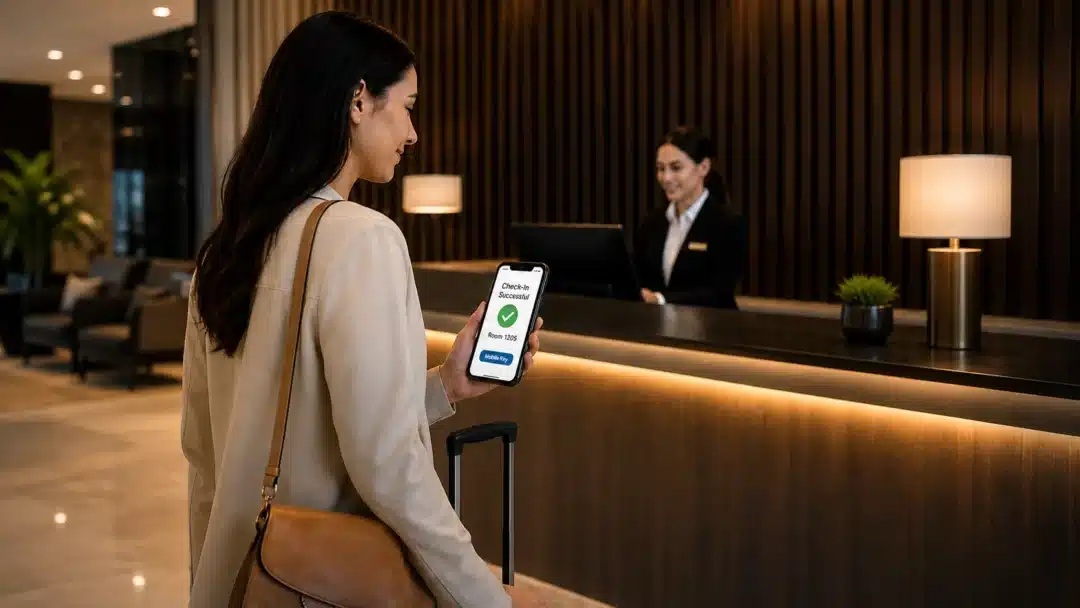
Historically, hotel quality was measured by the level of customer service at the front desk. However, in today’s hyper-connected environment, operational continuity is defined by the robustness of your IT Tech Support. A Wi-Fi failure, a Property Management System (PMS) crash, or a digital key malfunction can dismantle your brand’s reputation in minutes.
According to Xotels, a leading revenue management consultancy, a top trend for 2026 in guest experience optimization is the comprehensive improvement of hotel operations. They focused on the necessity of upgrading legacy systems to data-driven digital technologies and integrating diverse hospitality IT services.
This evolution means that simply reacting to technical glitches is no longer enough. To uphold your service promise under peak demand, it is mandatory to ensure technology acts as an invisible, flawless engine.
In the following sections, we will outline how to structure a high-performance IT framework, detailing the essential components and coordination strategies—from tech support 24/7 to managed tech support—required to maintain a “Zero Downtime” operation.
The Invisible Cost of Inefficiency: Why IT Tech Support is Mission-Critical
In the hospitality industry, digital ecosystems are deeply interdependent. When a system fails, the fallout is rarely just technical; it is fundamentally financial.
According to a hospitality technology report by Vingcard (cited by El Economista), 26% of travelers expect to use digital keys for their stays, while 35% anticipate contactless payment options. The report further indicates that guests are willing to pay an additional $22 per night for a location that delivers this level of personalized digital experience.
Furthermore, a study by Oracle Hospitality highlights that 26% of travelers are more likely to stay at a hotel that offers self-service technology to minimize contact with staff and increase efficiency.
Failure to maintain these systems leads to critical vulnerabilities that your organization cannot afford:
- Revenue Leakage: Downtime in Point of Sale (POS) systems or booking portals prevents real-time transaction processing. During high-demand events like the 2026 World Cup, these missed opportunities result in irretrievable economic losses.
- Erosion of Guest Experience: Lack of technological readiness for 2026 could result in a 15-to-25-point penalty in Net Promoter Score (NPS), according to Vingcard. Robust hotel IT support ensures these high-value touchpoints remain seamless, preserving brand loyalty.
- Security and Compliance Risks: Massive global events exponentially increase cyberthreats. Utilizing managed tech support ensures that sensitive guest data and Know Your Customer (KYC) compliance processes are shielded under global security standards like PCI-DSS.
| How does a system outage impact hotel profitability? Quick response: A disruption in critical systems such as the PMS (Property Management System) or POS triggers immediate revenue leakage by halting reservations and transactions. Beyond the balance sheet, it causes long-term reputational damage, decreasing Customer Lifetime Value (CLV) and inflating operational costs due to manual crisis management. |
Advance Tech Support: The Pillars of 24/7 Operational Continuity
To successfully navigate the high-stakes environment of the 2026 World Cup, Allied Global introduces an Advance Tech Support model that transcends traditional staffing. Unlike basic outsourcing, this framework is a cohesive operational ecosystem designed to synchronize people, processes, and technology.
The structure is built on a “Defense in Depth” strategy: While proactive monitoring prevents incidents, a multi-tiered response system ensures that if a disruption occurs, it is neutralized before it impacts the guest. This model provides real operational capacity through three critical layers:
1. Help/Service Desk 24/7 (Tier 1, 2, and 3)
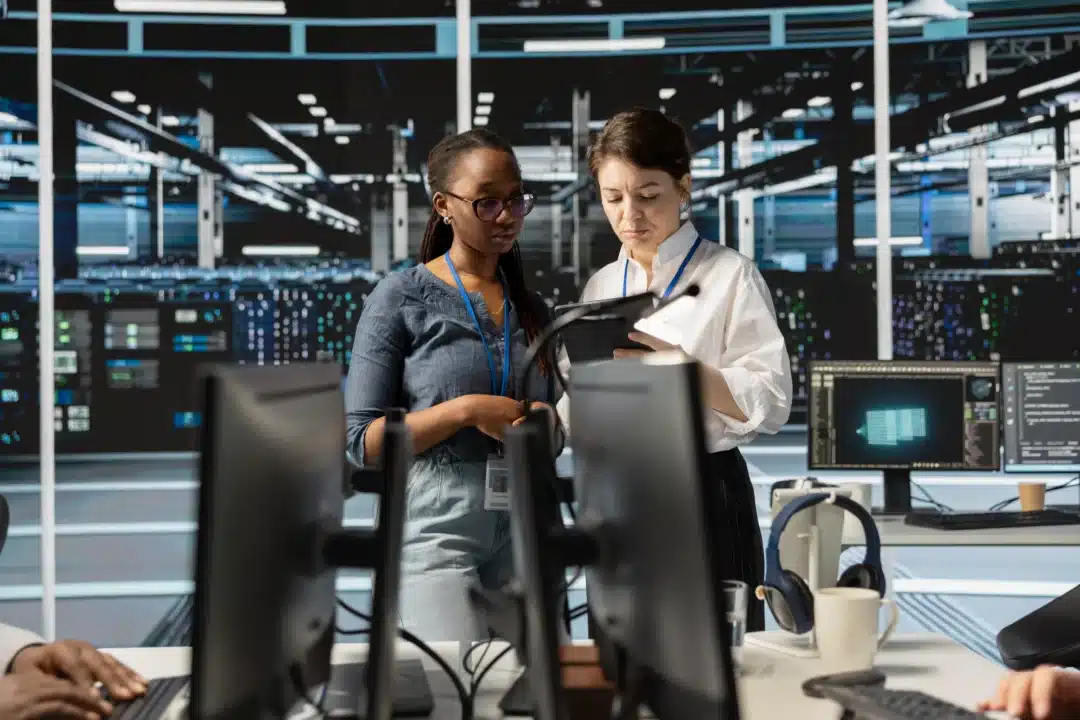
In the hospitality industry, the sun never sets on operations; therefore, your IT Tech Support must be relentless. With the desk service, this tiered layer acts as the primary response engine:
Tier 3 (Expert Infrastructure): engages for mission-critical failures or advanced cybersecurity threats. Having this level of expertise on standby ensures that even systemic crises are resolved with minimal downtime, preserving the hotel’s long-term profitability.
Tier 1 (Immediate Response): handles high-volume end-user incidents, such as Wi-Fi login issues or POS terminal resets, ensuring front-line staff remain productive during peak check-in hours.
Tier 2 (Specialized Support): triggers when complex software integrations or server glitches arise. This layer is vital for maintaining the stability of the PMS and digital key databases.
2. Network Operations Center (NOC)
Proactive monitoring is the difference between a minor glitch and a total blackout. Our NOC functions as the “brain” of your hospitality IT services, identifying bottlenecks in real-time.
Business impact: In the 2026 World Cup scenario, where thousands of devices connect simultaneously, the NOC ensures high-speed connectivity remains stable. By preemptively balancing network loads, it guarantees that the “invisible engine” of the hotel never stalls.
When it acts: It operates 24/7/365, detecting unusual traffic patterns or hardware overloads before they affect the guest.
3. Remote Tech Support and Field Services
Agility is key when managing global-scale events. This layer combines the speed of remote tech support with the physical capability of site deployment.
Scalability: This hybrid structure is designed to scale dynamically. As your hotel reaches higher occupancy during the tournament, the support capacity expands to manage the increased pressure on physical and digital infrastructure.
When it acts: Remote teams manage software updates, security patches, and cloud migrations off-peak to avoid guest disruption. If a hardware failure occurs—such as a critical router or a server component—Field Services are dispatched to provide hands-on resolution.
Operational Framework: Orchestrating an Integrated Support Structure
To maintain a “Zero Downtime” operation during the 2026 World Cup, hotels must shift toward a Hybrid Governance Model. This structure balances internal strategy with the high-volume technical execution provided by specialized IT support services.
The In-House vs. Outsourced Balance
Strategic decisions and vendor management should remain in-house. Conversely, 24/7 technical operations—such as multi-tier troubleshooting and network monitoring—are most efficiently managed through managed tech support. According to Deloitte, 80% of executives are planning to maintain or increase investment in third-party outsourcing.
More content: Solving IT Outsourcing Challenges with Nearshore Teams
The Roles: NOC, Help Desk, and Field Services
A high-performance IT Tech Support ecosystem defines clear boundaries for each functional unit:
Field Services: the physical extension of your hospitality IT services. They manage hardware replacements and on-site infrastructure that remote teams cannot reach.
The Help Desk: acts as the “Front-Line,” focusing on rapid incident resolution (e.g., POS failures) to keep the guest flow moving.
The NOC (Network Operations Center): Operates as the “Back-End” brain. While the Help Desk treats symptoms, the NOC prevents the disease by proactively monitoring bandwidth and infrastructure health.
When to Implement Dedicated Leadership (Coordinator / Lead / Manager)
Standard staffing is not enough under the 2026 World Cup pressure. A Dedicated Position is required when operational complexity rises. Having a dedicated IT Manager or Lead acts as a bridge between your executive team and technical execution, ensuring that SLAs are met and preventing revenue leakage through high-level oversight.
Strategic Checklist: Minimum Requirements for Hotel Operational Continuity
To compete and lead in the 2026 hospitality landscape, your organization must move beyond basic maintenance. A true Bottom-of-the-Funnel (BOFU) evaluation requires validating that your hospitality IT services can withstand the pressure of a global event. Use this expanded checklist to audit your current IT Tech Support readiness:
Nearshore scalability and cultural alignment: Does your partner offer remote tech support in your same time zone? The ability to scale up qualified technical talent nearshore ensures real-time communication and cultural alignment, which are critical during crisis management.
System redundancy and disaster recovery: Does your provider have an automated failover plan for partial or total outages? Ensure that critical systems (PMS, POS, Access Control) have a recovery time objective (RTO) of minutes, not hours.
Specialized domain expertise: Does your hotel IT support team have deep experience in hospitality ecosystems? High-stakes scenarios require engineers who understand the intricate integrations between PMS, CRM, and digital payment gateways to prevent revenue leakage.
Mission-critical SLAs and response times: Are your Service Level Agreements (SLAs) tailored for high-occupancy seasons? A lead-level provider should offer guaranteed response times (e.g., <15 minutes for Tier 3 issues) backed by financial penalties for non-compliance.
24/7/365 real-time coverage: Is your tech support 24/7 truly “always-on” or merely “on-call”? Global events demand a dedicated team that operates across all shifts with no degradation in service quality during nights or weekends.
Advanced escalation protocols: Is there a clear, documented path for technical escalation? Your provider must define exactly when an incident moves from a Tier 1 technician to a Tier 3 expert or a Dedicated IT Lead, ensuring that complex problems are resolved before they reach the guest.
Proven track record in massive events: Has your partner managed IT infrastructure for massive crowds or global-scale deployments? Prior experience in high-density environments is the most reliable predictor of success when scaling for events like the 2026 World Cup.
The Allied Global Strategic Advantage: Backed Operational Capacity
Unlike traditional outsourcing models that merely provide personnel, at Allied Global, we deliver a comprehensive ecosystem where advanced technology and consultative processes converge. In the high-pressure context of the 2026 World Cup, our value proposition centers on backed operational capacity—ensuring that your IT Tech Support is not just a reactive team, but a high-performance engine.
We integrate our proprietary technology directly into the support workflow to achieve superior managed tech support through:
- Agentic AI for Intelligent Triage: We implement AI solutions that go beyond simple chatbots. By utilizing Agentic AI, we automate ticket prioritization and execute autonomous tasks. In a hospitality setting, this means the system can instantly verify guest credentials or reset digital key access logs without human intervention, significantly reducing resolution times and allowing engineers to focus on high-impact infrastructure issues.
- Hyperautomation and RPA: To maintain tech support 24/7 without service degradation, we deploy software robots (RPA) to handle repetitive, rule-based tasks. Whether it’s processing massive batches of system updates or synchronizing POS data across multiple properties, hyperautomation ensures total operational continuity. This drastically minimizes human error and accelerates incident response during peak demand periods.
- Proactive Resolution Engine: Our hospitality IT services are designed so that technology acts as the first line of defense. By connecting Agentic AI with our NOC monitoring, we can trigger automated fixes before a guest even notices a connectivity dip, transforming your IT department into a proactive asset rather than a cost center.
| Why choose backed capacity over traditional staffing? Quick response: Traditional staffing scales by adding more people, which increases costs and training time. Allied Global’s backed capacity scales through technology, ensuring that your hotel IT support remains resilient, scalable, and cost-effective, regardless of the occupancy peaks expected in 2026. |
You may also read: Smart IT Automation with RPA & AI: Boost Efficiency and Innovation
Secure Your 2026 Operational Continuity
Relying on reactive IT is a financial risk. To protect your revenue and brand reputation during the 2026 World Cup, your hotel needs a proactive model backed by IT Tech Support, real-time monitoring, and tech support 24/7.
Don’t wait for a system failure to reveal your vulnerabilities. Ensure your infrastructure is resilient, scalable, and ready for maximum demand.
Take Action Today:
- IT continuity diagnosis: Identify critical points of failure.
- 2026 tech readiness assessment: Evaluate your PMS and POS scalability.
- 24/7 support audit: Verify your current response times and escalation paths.
Contact us now to schedule your Technical Readiness Assessment.
Key Takeaways
- IT Tech Support is the primary guardian of operational continuity and hotel profitability for 2026.
- System outages in critical infrastructure lead to immediate revenue leakage and severe brand reputation damage.
- A tech support 24/7 model with specialized tiers (Tier 1, 2, 3) is mandatory for managing high-demand global events.
- Allied Global provides managed tech support that integrates elite human talent with hyper-automation and Agentic AI.
- Proactive monitoring through a NOC is the only way to shift from reactive troubleshooting to “Zero Downtime” resilience.
Frequently Asked Questions
- Why is specialized IT Tech Support better than generalist support?
The hospitality sector relies on highly specific software ecosystems (PMS, digital key systems, POS). Specialized support understands these critical integrations and reduces Time-to-Productivity, ensuring faster, more accurate resolutions that generalist providers cannot offer.
- How does the nearshore model benefit U.S.-based hotels?
The nearshore model provides technical talent within the same time zone and with high cultural affinity. This facilitates real-time communication and significantly reduces operational costs without sacrificing service quality or response speed.
- What happens during a total system failure?
Our Advance Tech Support protocols include immediate disaster recovery procedures and instant escalation to Tier 3 experts. We minimize downtime through infrastructure redundancy and proactive monitoring from our NOC, often resolving issues before they impact the guest.
Glossary of Terms
- PMS (Property Management System): The central software used to manage reservations, guest check-ins, and daily hotel operations.
- NOC (Network Operations Center): A specialized center dedicated to 24/7 monitoring and maintenance of communication networks.
- Revenue Leakage: The loss of potential income due to operational inefficiencies or technological failures (e.g., POS downtime).
- SLA (Service Level Agreement): A formal contract defining guaranteed service levels, uptime, and response times.
- Field Services: On-site technical support for hardware maintenance and physical infrastructure deployment.
- Agentic AI: Advanced AI systems capable of autonomous reasoning and task execution to resolve technical incidents without human intervention.
- Tier 1, 2, 3 Support: A hierarchical support structure where T1 handles basic issues, T2 manages complex configurations, and T3 resolves mission-critical infrastructure crises.
Sources
- Escobar, S. (2026, January 2). Hospitality Sector Faces its Greatest Technological Challenge Heading into the 2026 World Cup. El Economista. Retrieved from https://www.eleconomista.com.mx/econohabitat/sector-hotelero-enfrenta-mayor-reto-tecnologico-rumbo-mundial-20260102-793566.html
- Landman, P. (n.d.). Top 10 Hospitality Industry Trends for 2025. Xotels. Retrieved from https://www.xotels.com/en/hotel-management/hospitality-industry-trends
- Roiback. (2025, Oct 16). Cybersecurity in the Hotel Industry: Main Threats and How to Protect Your Business. Roiback. Retrieved from https://www.roiback.com/rb-academy/ciberseguridad-en-la-industria-hotelera-principales-amenazas-y-como-proteger-tu-negocio
- Hosteltur. (2024, April 19). Hoteliers Facing the Challenges of Digital Threats. Hosteltur. Retrieved from https://www.hosteltur.com/163017_los-hoteleros-frente-a-los-desafios-de-las-amenazas-digitales.html
- IMP Consultores. (n.d.). New Technology in Hotels Without Processes. Retrieved from https://www.impconsultores.com/nueva-tecnologia-hoteles-sin-procesos-imp/
- Zavia ERP. (n.d.). Hotels in Mexico Fine-tune Their Technology Strategy for the 2026 World Cup: 10 Strategic Keys to Compete and Win. Retrieved from https://www.zaviaerp.com/hoteles-en-mexico-afinan-su-estrategia-tecnologica-ante-la-llegada-del-mundial-2026-10-claves-estrategicas-para-competir-y-ganar
- ACIS. (2026, January 22). Technology as the Core of the Hospitality Sector in 2026. Retrieved from https://www.acis.org.co/blog/noticias-2/la-tecnologia-como-eje-del-sector-hotelero-en-2026-5509
- Smart Travel News. (n.d.). Experience Becomes the Hotel Operating System in 2026. Retrieved from https://www.smarttravel.news/la-experiencia-se-convierte-en-el-sistema-operativo-del-hotel-en-2026/
- Cuervo, H. (2025, December 10). IT Operational Continuity for 2026. Sevencom. Retrieved from https://sevencom.com/continuidad-operativa-ti-2026/
- Carrier, R. (2024, September 10). The Evolution of Guest Technology and Operational Resilience. Hospitality Net. Retrieved from https://www.hospitalitynet.org/opinion/4121980.html
- HappyHotel. (n.d.). Knowledge Base: Property Management Systems (PMS) in Modern Hospitality. Retrieved from https://www.happyhotel.io/en/lexicon/property-management-systems